


ONCE AGAIN, the City of Kingston is being hauled on the carpet by a citizen’s group for lack of transparency and failing to follow its own procedures.
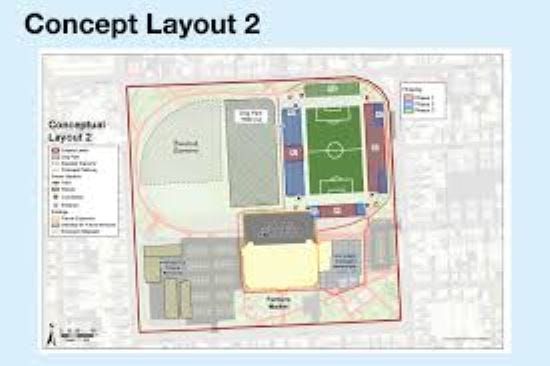
This time, the rebuke comes from the Williamsville Community Association (WCA), whose members – incensed by the City’s handling of the soccer stadium proposal for the Memorial Centre grounds – decided to do some digging of its own.
The information they received through a Municipal Freedom of Information and Protection of Privacy (MFIPP) request backed up their suspicions that the City was playing fast and loose with the rules and, according to Co-Chairs of the WCA, responsible for some “shaky and shady decision-making.”
The Stadium proposal felt sketchy from the beginning. A guy, at that point unknown to Council, walked in the front door with a pitch to build a private stadium on public land. And he seriously wowed the right people. At the speed of light, the Memorial Centre green space was put on the table by the City, Tourism Kingston and Kingston Economic Development were projecting windfalls, and Mayor Paterson was on Instagram exulting in the perceived coup of bringing professional soccer to Kingston.
But the community’s overwhelming sentiment was that the proposal wasn’t right for the neighborhood or the city. More than 5,000 residents signed a petition against the soccer stadium proposal, one of the largest petitions ever received by the City. Developer Paul Barbeau of Victory Grounds Ventures (VGV) officially withdrew the proposal in March 2025.
Fortified by the MFIPP information, the WCA has called on the City to launch an independent review of its handling of the soccer stadium proposal.
‘Alarming gaps’
In a Feb. 18 letter to Mayor and Council, The WCA says the new information revealed “alarming gaps in due diligence, and that much of the process was hidden or obscured both between city staff and Council.”
The WCA letter notes that its review of the MFIPP information leads it to conclude that the stadium proposal was unsolicited by the City, that there was no written proposal, and no evidence that City staff had devised a process for review in advance of a recommendation to Council.
In fact, the WCA’s contends that City staff, so enamored of the stadium opportunity, “withheld critical information” from council and put forward a proposal for review without allowing time for due diligence. Even some city councilors were taken aback by the air of inevitability around the stadium. “I think that it really caught everyone by surprise,” Williamsville District Counc. Vincent Cinanni recently told The Whig-Standard. “I do think there was a lack of information that staff and councilors had. No one really had all the information, just a vision.”
Only a few weeks ago, another citizen group raised similar concerns about the City’s lack of transparency. The Coalition of Kingston Communities representing 12 local groups accused the City of failing to keep its promises around public consultation on natural heritage policy. There has been similar reaction to Jay Patry’s “too good to pass up” $3 million inflatable water park set to open on publicly owned Confederation Basin in the summer of 2027. Residents voiced concerns about waterfront noise, lack of parking, and health concerns from lake pollution during episodes of storm water runoff.
When asked by The Crow for a response from the Mayor about whether he feels citizens concerns are justified, City officials replied with a curt: “The City follows its Council-endorsed public engagement framework where applicable.”
Frustrated and blindsided
Many Kingston residents are feeling frustrated, shut out, and in some cases blindsided by City decision-making. That never becomes clearer than when the broadly representative Coalition of Kingston Communities (CKC) releases its annual report card.
The local watchdog evaluates the City’s performance on transparency, accountability and public engagement, allocating grades and offering supporting comments. Now going on eight years, the new report card is set to be released this Tuesday.
There’s no reason to expect better grades this year, says Coalition Chair Christine Sypnowich.
“Year after year, the Coalition has decried the City’s failure to show a genuine interest in listening to public input and incorporating it into informed decision-making,” she says.
“Sadly, in 2025, instead of showing improvement, the City slipped further away from its democratic obligations. Important decisions, with long-term impact, continue to be made without meaningful and timely opportunities for the public to contribute.”
The City has made significant gestures towards transparency over the years, most notably with the launch of its Get Involved Kingston portal, promoted as “a place to learn about important City initiatives and offer input to shape projects, policies and initiatives.”
It’s difficult to assess the overall success of Get Involved Kingston as any “consolidated information” about the initiative is provided to City Council but not issued as a public annual report. Any public reporting occurs at the project level when “engagement summaries are published on the site and shared directly with participants,” says the City.
Some critics fear that participation in the portal is limited by the fact that users are required to sign into the City’s database and create an account. Citizens can, however, comment anonymously if they wish.
The City defends the sign-up approach saying it prevents overrepresentation of a viewpoint by someone signing in multiple times. The City notes as well that the online public engagement platform enables it to reach more residents and gather more ideas and input on projects.
The Coalition has decried the idea of “virtual tools” such as online surveys through Get Involved taking the place of “genuine interaction within a public decision process such as delegations at public meetings.” In a controversial move at the end of 2024, the City modified its procedural by-law to allow for fewer public delegations.
In another move toward transparency, the City in 2017 adopted the IAP2 Spectrum of Public Participation, a global organization seen as a best practice framework for increasing public engagement. Through a “spectrum” of engagement levels, it can identify and better communicate various types of public consultation, from informing residents through to consulting, involving, collaborating and empowering.
Initiatives publicized on Get Involved Kingston typically have a project page with a “How We’re Engaging” section that identifies the IAP2 Spectrum level being applied.
More collaboration needed
But the IAP2’s top-down approach may be out of step with the expectations of motivated community groups in Kingston. The framework for levels of engagement reflects the perspective of the organization in charge and may not align with today’s demand for more collaborative forms of governance.
Frustrated by lack of openness about City decision-making, Kingston community groups have begun resorting to municipal FOI requests. City residents and journalists shouldn’t have to file freedom of information (MFIPPA) requests in order to access public information. According to city staff, an FOI request is only necessary when the requested information “is contained in unpublished records, when locating or compiling records is necessary, when the records may include personal or third-party information, and/or the records may require review for statutory exemptions.”
There are legitimate legal and privacy reasons for carefully managing and sometimes withholding information. But misuse of FOI systems by self-protective governments is widespread and must be carefully monitored to ensure alignment with City values and goals around transparency.
In its letter, the WCA asks Mayor and Council to make clear how they will handle any future unsolicited proposals for development on City land.
Kingston, like many mid-sized municipalities, does not have what it calls “an approved City policy governing unsolicited proposals”.
In a statement to The Crow, the City notes that in the absence of such a policy, its process has been to “bring these proposals for Council’s consideration through Council reports.”
That may be good enough for some mid-sized municipalities but it’s not good enough for Kingston, a highly educated and informed city with a committed and vibrant activist community eager to get involved, the mantra of the City’s engage website.
An invested and connected community
This call from within the community for a policy on unsolicited proposals is a sign of an invested and connected community. It speaks to the desire for fairness and integrity in city affairs, and should be seen as a welcome antidote to today’s widespread apathy about civic matters. Such a policy would ensure that unexpected, non-competitive proposals are managed with transparency and accountability, and without bias.
The City has agreed to take another look at its handling of unsolicited proposals. It tells The Crow, “In support of building increased awareness of City processes, City staff will review municipal best practices for the unregulated process of receiving and considering unsolicited proposals”.
Clearly, the City’s idea of transparency and public consultation does not match the expectations of citizens. And Kingstonians have every reason to expect a more open and consultative process given the City’s effusive lip service to the concept. To date, the City’s seems to have plateaued at the level of mixed messages, an uncomfortable place for everyone.
Erecting the scaffolding of transparency and accountability, even with the most well-intentioned objectives, is just a start. And it’s not unusual to get stuck there. There will always a gravitational pull away from transparency from those attempting to galvanize the power and resources to get things done.
Now is a time for the City to strongly invest in restoring trust in the community. A great start would be commissioning an independent review of the stadium issue with a turn-around that allows plenty of time for all involved to digest and respond to the findings before the municipal election in November. A true breakthrough will occur when transparency is understood by all to be less of an obligation and more of an edge. In other words, the pathway to a more creative, dynamic, efficient and prosperous city.
Anne Kershaw is co-editor of The Kingston Crow,