


THE DRAMATIC rescue of 23 ice fishermen from an ice shelf in Georgian Bay made headlines last weekend, but the news was good: no one lost their life in the frigid waters.
The bone-chilling tedium of that sport aside, what is it about frozen surfaces that exert such a pull on us? In her iconic song, Joni Mitchell told us she wanted a river she could “skate away on.” Is this a uniquely Canadian obsession?
Surprisingly, no, according to Helen Humphreys’s lovely book, The Frozen Thames. This collection of stories, told between 1142 and 1895, chronicles some of the 40 times London’s Thames River froze solid. Its sparely written vignettes create a haunting portrait of the beauty, brutality, gaiety and tragedy experienced by those who go out on the ice.
Although I live a short walk away from the St. Lawrence River, I’ve rarely ventured out onto it in winter, and never more than a few yards from shore. One glorious exception was the year we had a flash freeze, and we were able to skate for kilometres along the shoreline, marvelling at being able to see right to the bottom, including the little fish suspended beneath the glassy surface. The water recedes to shallow depths every fall, and was frozen solid for a long way out, so I wasn’t worried.
I grew up near another famous Canadian river, but I definitely didn’t venture out onto that one, thanks to circumstances earlier in the 20th century. More on that later.
Kingstonians have their own gigantic frozen body of water in the form of Lake Ontario, which for years gave the residents of offshore islands handy access to the mainland. When I moved to Kingston in 1980, this ice road (or “ice bridge” as it was also called) to and from Wolfe Island was still in use, its path marked by discarded Christmas trees. I was horrified by it. Why would anyone drive, let alone walk, across that stretch of the lake in winter? Were there not any bylaws preventing it?
Tragically, four years later, driving on the ice bridge was outlawed after a Wolfe Island family’s car went through the ice and three of its four passengers drowned.
It’s too bad Kingston hadn’t heeded a much earlier lesson offered by another, more famous ice bridge, on the Niagara River. Despite the force of an estimated six million cubic feet of water falling every minute, enormous sheets of ice form at the base of the falls. In extreme winters, this “ice bridge”, as it is called, could reach at least 40 feet, and sometimes up to 80 feet high. It could arrive as early as December and linger as late as April. Weirdly, it could also come and go – freezing, then breaking up, only to re-form within days.
For many years the ice bridge was a popular winter attraction. On Sundays, tens of thousands of visitors would venture out on the ice. Tobogganing was popular, but so were visits to offshore tarpaper-covered wooden huts, erected and staffed by enterprising bootleggers, photographers and souvenir-hawkers. Or, as the Drummondville Recorder of Feb. 24, 1888 reported: “The seven shanties on the ice bridge were doing a good business in liquor, photographs and curiosities, all day long.”
On January 22, 1899 – Sunday, as it happened – the ice suddenly broke up, with between 50 and 100 people on it. The river’s current is ferocious, but miraculously everyone managed to reach shore. The last survivor avoided being swept downstream by grabbing one of the girders of the Upper Steel Arch Bridge, which connected the Canadian and U.S. sides of the river.
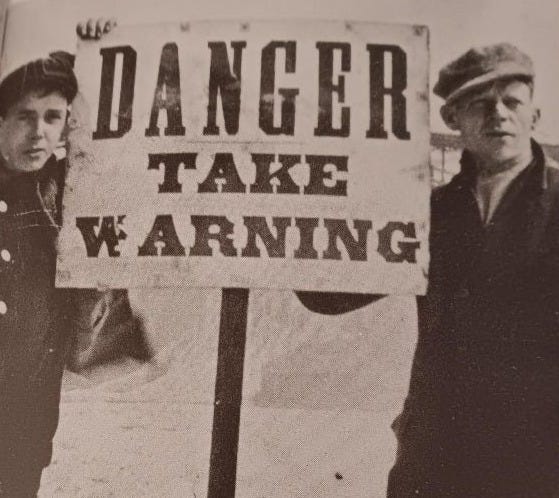
But another Sunday ended the fun for good. On Jan. 22, 1912, the ice bridge suddenly broke loose, carrying three people downriver. Firemen, police and railway workers from both sides of the river tried to reach them with ropes but the force of the current pulled the ropes from their hands. A couple from Toronto and a 17-year-old boy from Cleveland died after their ice floes broke up and they were swept away in the Whirlpool rapids. (You can read a detailed account of the tragedy, DEATH ON AN ICE BRIDGE, A Story of Love & Valour, here.)
Afterwards, authorities on both sides of the river prohibited anyone from walking on the ice bridge.
Back here in Kingston, I’ve not completely turned my back on our frozen St. Lawrence. Lower water levels from fall to spring, and polar vortex winters, make it possible to walk safely on the ice near the shoreline. It’s not just about the liberating feeling of walking on water while getting a new perspective on the landscape. It’s also about the soundscape. Maybe that’s part of our obsession. On a still day you can hear the weird music of the ice in all its burbling, moaning, booming glory. We can skate away on it.